
Your checking account shows −$212. The transaction list underneath doesn’t explain how it got there. So you’re asking: Why is my bank account negative?
That can happen when a payment posts later than expected, a deposit is taken back, a temporary credit is reversed, or a fee appears. And sometimes the number you are seeing is the available balance rather than the posted account balance. Those situations call for different next steps.
Before another payment goes through, find out which entry created the shortfall. If you spot a transfer you never made, contact your bank right away to report the suspected error; don’t wait for the balance to correct itself.
Your balance is negative, but where is the transaction?
First, open the account’s posted transaction history and compare it with the most recent statement or the last point where the balance made sense. Then check the separate pending list. Some banking apps show holds in available funds before they appear as completed debits, while payments made earlier can post later than you expected.
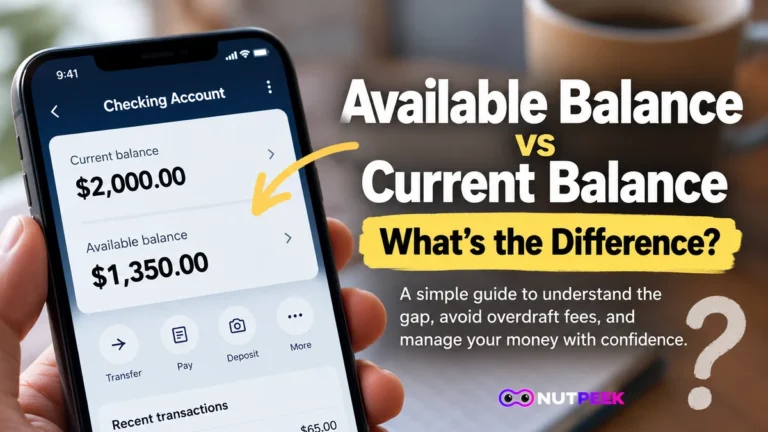
If you see two balance figures, don’t add them together. One often reflects settled account activity while the other accounts for holds and availability rules. That distinction matters when you are trying to find missing money.
For the separate problem of two figures that don’t match, see Available Balance vs Current Balance: Why the Numbers Don’t Match. Here, the job is to find what made the account go below zero.
Use this negative-balance check before guessing the cause
Here is a hypothetical, not a real bank statement. All the numbers are ordinary text so you can read them on a phone or with a screen reader.
| What you can find in the list | Change | Your running total |
|---|---|---|
| Last balance you can verify | — | $85 |
| ACH bill payment that posted | −$210 | −$125 |
| Previously credited check deposit returned | −$80 | −$205 |
| Balance the bank shows | — | −$212 |
| Unmatched amount | — | $7 |
$85 − $210 − $80 = −$205, but the bank shows −$212. That $7 gap is your question. In this hypothetical, it turns out to be a fee posted under a different description on the next business day. In your account, it could be a fee, another debit, or an adjustment you haven’t spotted yet. Either way, "Why is there a $7 difference?" gets a faster answer than "Why is my account negative?"
To check your own account, write down the last balance you can verify. Subtract each posted debit and add each posted credit in the order shown on your bank’s statement. Reverse any deposit or temporary credit that the bank has actually removed. Compare your calculated total with the bank’s posted/current balance.
If there’s still a difference, write down that unmatched amount. That’s a much better question for the bank than simply asking why the account is negative. Keep pending holds on a separate list so you don’t subtract the same purchase twice.
Which of these changed your balance?
| What you found | What to check next |
|---|---|
| A card charge or ACH payment posted overnight | Check the actual posted date, merchant or payee, and whether another scheduled payment is due. Ask the bank which balance was used to determine any fee. |
| A deposited check or credit disappeared | Look for returned deposit, deposit adjustment or similar language. Ask for the return/adjustment notice; a temporary hold and a returned deposit are different. |
| A provisional dispute credit was removed | Find the bank’s dispute decision or reversal notice. Check whether the credit was tied to a checking/debit dispute or a credit-card account, and reconcile the original debit separately. See what a provisional credit reversal can mean. |
| A transfer from savings appeared | It may be an automatic overdraft-protection transfer covering a shortfall. Find which debit triggered it and ask whether a transfer fee applied. |
| An overdraft or NSF fee posted | Identify the triggering item, whether it was paid or returned, and the bank’s fee terms. The bank’s posting order can matter. |
| Only the available balance looks negative | Check authorizations and holds before treating it as an actual posted negative ledger balance. |
| A debit or withdrawal is not yours | Report the specific suspected unauthorized transfer promptly using the bank’s official contact channel; record the amount and date. |
If you inserted cash into an ATM and the credit never appeared, that is a different problem from a returned check deposit. Follow the steps in ATM Cash Deposit Not Showing Up and retain the ATM confirmation.
"I didn’t opt into overdraft." How did this happen?
Opting out of one-time debit card and ATM overdraft fee coverage does not guarantee that every payment will be declined or that your account can never go negative. Checks, ACH debits and recurring electronic payments may follow different rules. Banks also distinguish between paying an overdraft and returning a payment for insufficient funds.
Under Regulation E, a bank generally needs your affirmative opt-in before charging a fee for paying an overdraft on an ATM or one-time debit card transaction. That is not a blanket ban on negative balances or on charges associated with checks and certain recurring payments.
If a fee surprises you, ask which transaction type triggered it and whether the bank has your overdraft consent where required. A fee for a returned item is not the same as a fee for an item the bank paid into overdraft.
"I had enough money when I paid." Why is there a fee now?
The date you tapped your card isn’t necessarily the date a payment settled. The order in which the bank posts credits, checks, ACH payments and card transactions can also change what was available when each item processed. Banks do not all use the same sequence.
Don’t assume the bank processed everything strictly in purchase order—or that it always posts the largest debit first. Instead, ask for the posting dates, transaction sequence and balance calculation used to assess the fee.
If you authorized the payment when sufficient funds appeared available, mention that fact and ask for a review of the charge. Save the earlier balance notification or receipt if you have it.
Do you need to add money immediately?
If the shortfall is real, ask the bank what amount would restore the account and whether another check, ACH bill or fee is scheduled. Ask when a deposit would actually become available; a transfer or check deposit does not always cure a shortfall instantly. If you can, avoid initiating new payments that the account cannot cover.
If the amount is an error or an unauthorized electronic transfer, do not treat adding money as the only solution. Follow the error-reporting branch in the decision table above. An inquiry about a displayed balance alone is different from telling the bank that a transaction was wrong or unauthorized.
If you don’t know yet, do not spend a temporarily higher available number as though the discrepancy were solved. Preserve the latest statement, pending activity, transaction IDs and any bank notifications while you investigate.
An unresolved negative balance can lead to additional fees or even account closure under an institution’s policies. There is no universal number of days after which every U.S. bank closes an overdrawn account. Ask for the actual deadline and available options for your account.
What to ask the bank if the numbers still don’t match
You don’t need to describe every possible cause. Start with your unexplained difference and ask:
- Which entry first changed the posted balance below zero? What is its effective posting date?
- Is the discrepancy a pending authorization, a returned deposit, a reversed credit, or a posted debit? Which amounts are already included in the ledger?
- If there is a fee, what transaction triggered it? Was that item paid or returned, and what posting sequence and account terms applied?
- What do I need to do next? If the deficit is confirmed, what deposit amount and availability deadline apply? If I have already raised a suspected error, what reference number or next step should I use to follow up?
A negative balance tells you the result. A reconciled transaction history tells you which decision to make next.
Quick answers
Why is my bank account negative for no reason?
There is usually an account entry or availability adjustment to investigate, but the banking app may not make it obvious. Compare posted transactions with pending activity, deposit adjustments, credit reversals and fees. If the entries don’t add up, bring the unmatched amount to the bank and ask which item is missing from your calculation.
Will a pending transaction make my bank account negative?
A pending hold can reduce the available amount shown in an app before a final debit posts. Whether your posted account balance is negative is a different question; check how your bank labels those figures and don’t count the same hold as a settled charge.
Can overdraft fees appear even if I opted out?
Some payment and fee categories are outside the one-time debit/ATM overdraft opt-in protection. Ask whether the fee came from a check, ACH, recurring transaction, paid overdraft, or returned item and review the account terms.
Can I just wait until payday?
The bank’s processing schedule and your upcoming payments matter. Ask for the actual amount needed, when a deposit becomes available, and any potential fees. If the ledger still doesn’t match, use the discrepancy questions above before assuming payday will resolve it.
Sources
- Consumer Financial Protection Bureau — Know your overdraft options
- Consumer Financial Protection Bureau — Regulation E §1005.17: Overdraft service requirements
- Consumer Financial Protection Bureau — Data Spotlight: Consumer experiences with overdraft programs
- Consumer Financial Protection Bureau — Regulation E §1005.11: Procedures for resolving errors