
Still charged interest after paying off credit card? If you were already carrying a balance, interest may have kept building until your payoff actually posted. That leftover amount is often called residual or trailing interest.
That does not automatically mean the issuer made an error.
The timing gap between your statement date and the date the payoff posts is the key. Card terms and calculation methods can vary by issuer and country.
Key Takeaways
- This example assumes the cardholder was already carrying a balance and interest was accruing.
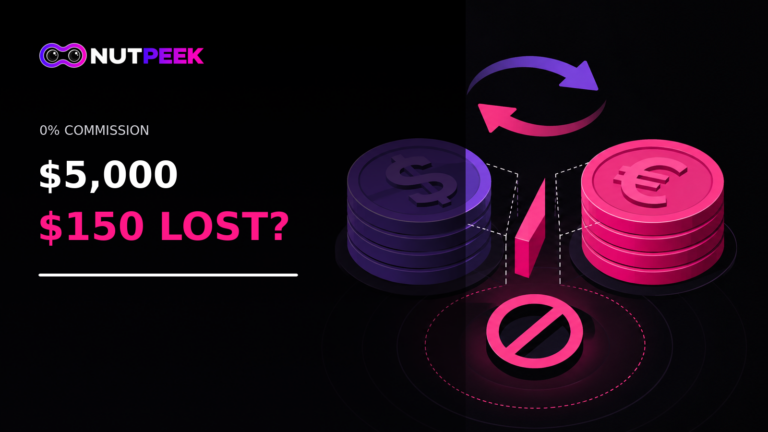
- $5,000 at 24% APR for 15 days is about $49.32 in simple illustrative interest.
- Residual interest can build between the statement closing date and the date the payoff posts.
- If you normally pay your full statement balance on time and keep your grace period, this is generally not the situation you are in.
- Card terms vary, so your issuer’s agreement controls how interest is calculated.
Still Charged Interest After Paying Off Credit Card? Here’s Why
The confusing part is timing.
Your statement may show a balance on one date, but you may not pay it until several days later. If that balance was already subject to interest, the interest does not necessarily stop on the statement date.
It can keep accruing until the issuer receives and posts your payment.
That means the payment can wipe out the balance shown on your statement while a small amount of newer interest is still waiting to be billed.
The $49 Example
Assume you were carrying a $5,000 credit card balance at 24% APR.
Now assume 15 days pass between the statement closing date and the date your payoff posts.
That roughly $49 can show up on the next statement even though you believe you already paid the card off.
The important point is not the exact $49. It is that the final interest can be generated after the statement you just paid was created.
What Is Residual Interest?
Residual interest, also called trailing interest, is interest that can accrue after a billing cycle closes but before a payment actually posts.
The Consumer Financial Protection Bureau says that when you carry a credit card balance, most card companies charge interest from the billing date until they receive your payment. Chase and Citi also describe residual interest as interest that can continue building between the statement date and the payment date.
2. Your statement closed.
3. Several days passed before your payoff posted.
4. Interest kept building during those days.
5. That final interest appeared on the next bill.
Who Usually Does Not See This?
If your card offers a grace period and you consistently pay the full statement balance by the due date, you can generally avoid interest on purchases.
The CFPB explains that a grace period may let you avoid interest when you are not carrying a balance and pay the balance in full by the due date.
So this article should not be read as saying everyone who pays a card in full will get another interest charge.
The $49 example specifically assumes you had already been carrying a balance and had lost the interest-free grace-period treatment on that balance.
What Should You Do After Paying Off a Carried Balance?
Check the next statement instead of assuming the account is finished the moment the large payment posts.
- Look for a small residual or trailing interest charge.
- Check your current balance after the payoff posts.
- Review your cardholder agreement if the charge is unclear.
- Call the issuer and ask for the exact payoff amount if you want to close out an interest-bearing balance as precisely as possible.
If you see an interest charge you do not understand, ask the issuer how it was calculated rather than assuming it is correct or incorrect.
How This Connects to a 24% APR
A high APR makes small timing gaps more expensive.
At 24% APR, a $5,000 balance costs roughly $3.29 per day using a simple APR ÷ 365 illustration.
That is why 15 extra days can add up to about $49.
If you want to see the bigger picture, read What 24% APR Really Costs You.
FAQ
Can I be charged interest after paying my credit card to zero?
Yes, if interest was already accruing before your payoff and additional interest accumulated before the payment posted. Whether that happens depends on the account terms and your payment history.
Is residual interest a fee?
No. It is generally interest on a balance that remained subject to interest for additional days.
How can I avoid residual interest?
The best approach is usually to maintain your grace period by paying the full statement balance on time each month. If you have already been carrying a balance, check with the issuer for the current payoff amount and review the next statement.
Why is my number different from $49?
The $49.32 figure is only an illustrative example using $5,000, 24% APR, and 15 days. Your balance, APR, number of days, compounding method, and card terms may differ.
Sources
Consumer Financial Protection Bureau — Interest after carrying a credit card balance
Consumer Financial Protection Bureau — Credit card grace periods
Chase — Understanding residual interest
Citi — What is residual interest?
Calculations are illustrative and use a simple APR/365 estimate. Actual issuer calculations and card terms may differ.
This content is for informational and educational purposes only and is not financial, legal, or tax advice.